Each of us has stories to tell—to share with each other and the next generations. It is in remembering and sharing our stories that we learn from the past and improve ourselves and our world, for now and for the future. I hope that my story inspires you to think about your own ancestors who traveled from afar to begin a new life for themselves and their future family. My own search for my family roots ended up much bigger than myself. So I started my blog with Searching For My Hakka Roots, then followed it with The Salt Merchant's Granddaughter.
About twenty years ago, I started writing about my thoughts and memories as a keepsake for my children. But it never finished ... until my oldest son went to college. In his first year college, my son Jonathan took a class on the history of modern East Asia. It covered mostly China, Japan, and Korea. When we talked, I was very embarrassed not to know much Chinese history. I heard the names before, but I really had no clue where, what, or when.
Some names were familiar to me; even some poems that I had remembered, because I had a hard time memorizing them for tests in school. I did not understand and I did not even try to understand. My old Chinese teacher Zhou (周) used to be so absorbed into the poems. He was a very nice, skinny, old man with only a little hair left on his head. I still remember his face in class. His head was swaying and his eyes were closed while he recited the poems. He did not notice that we were making faces and laughing at him. He forced us to memorize the poems and I hated it. He has long since gone to heaven. Reading the same poems with a better understanding of Chinese history plus my own adult experience together now brings me to tears, as if I finally understand what my teacher was trying to teach us. Those pieces of history were imprinted in my brain but scattered all over the place; now, I felt that I needed to put them where they belonged.
China was non-Chinese who gave the name to China and no Chinese accepted this name. China translated from Chinese is still Zhong Ge (中國), the Chinese way, the Middle Kingdom. China also considers itself Zhong Hua (中华), the combination of Zhong Ge (中國) and Hua Xia (华夏), the central plains along the Yellow River.
Mt Everest was named after Sir George Everest who was the first surveyor of India in 1830. The Chinese call it Qomolangma, which means “mother goddess of the Earth" in Tibetan since beginning of time. The seven states before the first Emperor Qin should really mean seven countries (國) in Chinese. The Emperor is above all the kings in old China.
China was like a big furnace that had been burning for over 5000 years; it took whatever and whoever, and melted them all together into its identity today. Although many had tried to conquer China, all had failed. China instead absorbed them and made itself bigger.
Xia Dynasty 夏朝 (2100-1600 B.C.): ruled by Xia family Si (姒).
My grandmother’s family name was Xia (夏), which means summer. It ranks as the 55th most popular family name in China. This family started the first Dynasty in Chinese history - the Xia Dynasty. Seventeen rulers from this dynasty ruled China for 400 years, spanning fourteen generations. It was the first family name that was directly related to a dynasty. Its leader Chong Boxi assisted Yu Shun in combating a flood. After Boxi’s death, his son, Yu, took over the assignment. During the 13th year of fighting the flood, he passed by his house three times, but did not stop by to visit. Due to his achievement, Yu Shun gave Xia Yu his throne before he died. Then, Xia Yu made Yangcheng his capital, before moving to Yangyao (Yu Zhou in Henan 河南).
Xia Jie (夏桀1728–1675 BCE) was the 17th and last ruler. He was a corrupt tyrant who brought down the dynasty started by Xia Yu the Great. He was a known alcoholic, and lived a lavish and reckless lifestyle. According to Han Ying's (韓嬰) book Han Shi Wai Zhuan (韓詩外傳), Jie’s concubine Mei Xi (妹喜) loved drinking and she wanted a lake filled with wine. So Xia Jie ordered over 3000 naked men to drink the lake dry while she and Jie both sailed in Alcohol Lake drinking and enjoying music. Terribly, they laughed whenever they saw a man had drowned; eventually all drowned. Mei Xi loved the sound of tearing silk apart by hand; Jie ordered loads and loads of silk and asked his people to tear them to make her happy. Chancellor Guan Long-feng (關龍逢/关龙逢) criticized him. As a result, Jie yelled and killed Guan. He told his people that he was the sun above the sky that would never fall. His people could not criticize him so they sang to the sun asking the sun to fall down, since they would rather be killed by the sun than suffer under Jie’s rule. The Shang army fought Jie's forces and defeated the Xia army, and started the next Dynasty, the Shang Dynasty in 1783 B.C. The conquered people of Xia made Xia their surname.
 |
| Proposed location of the Xia dynasty |
“Reunited, it forms the opposing river and flows into the sea.”
In other words, “the stream” in question wasn’t China’s famed Yellow River, which flows from west to east. “There is only one major river in the world which flows northwards. Which one is it?” the professor asked. “The Nile,” someone replied.
Sun then showed a map of the famed Egyptian river and its delta — with nine of its distributaries flowing into the Mediterranean. This author, a researcher at the same institute, watched as audience members broke into smiles and murmurs, intrigued that these ancient Chinese texts seemed to better agree with the geography of Egypt than that of China.
"Shang_Dynasty 商朝 (1700-1046 B.C.) ruled by Zi (子)
The Sanxingdui (三星堆) Culture, an unknown Bronze Age culture, was discovered in 1987 in Guanghan County in my hometown Chengdu, Sichuan. The buried city had walls and was built on the banks of the Yazi River. The birds, dragons, snakes, and tigers were most of the animal findings at Sanxingdui. This culture is similar to the early kingdom of Shu during the period of the Shang Dynasty. They had a different method of bronze-making from the Shang.
 |
| Sanxingdui bronze heads with gold foil masks |
Revisiting the Southern Silk Road
Part 1 Border of the ancient kingdom of Shu
Part 2 The megalithic tombs China has four Stonehenge sites.
Part 3The lost kingdom of Dian
Part 4 South of the rainbow
Part 5 Roud to the West
The Mystery of Ba People
Part 1- Sword
Part 3- White Tiger
Part 4- Salt
Part 5- Bell
Part 6-Boat
That is why Sichuan also called "Ba" "Shu". Saving the Culture Relics of the Tree Georges
 |
| Remnants of advanced, stratified societies dating back to the Shang period have been found in the Yellow River Valley. |
Zhou was the longest dynasty in Chinese history, ruling China for 791 years. The use of iron was introduced into China during this time. Written script evolved from the ancient stage to the beginnings of the modern stage. It was the Chinese medieval time, when Zhou ruled from walled cities rather than castles. The Zhou legitimized the "Mandate of Heaven" and the notion that the ruler (the "son of heaven") governed by divine right. His dethronement, however, would prove that he had lost the mandate. It laid foundations for the beginning of native Chinese philosophy, Confucianism, Taoism, and ancient Chinese laws.
- The five orders of Chinese nobility.
- Ancestral temples (size, legitimate number of pavilions)
- Ceremonial regulations (number of ritual vessels, musical instruments, people in the dancing troupe).
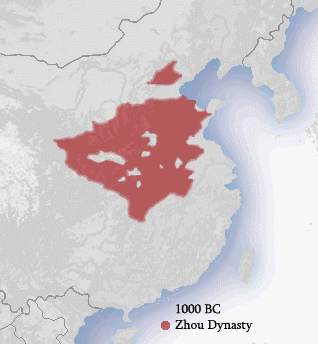
Beneath the yellow earth episode 1 Heritage from Spring and Autumn Period Part 2
Han Jue (韩厥) fifth politician and general in the Han family. He commanded the Jin's (晋国) left wing successfully against Chu.[7] In 573 BC, Han Jue became Jin's zhengqing (正卿),[8] the highest post in Ancient China. He was credited to save the last son of Zhao family (The Orphan of Zhao 趙氏孤兒).


Warring_States_period (战国时代 476-221 B.C.)


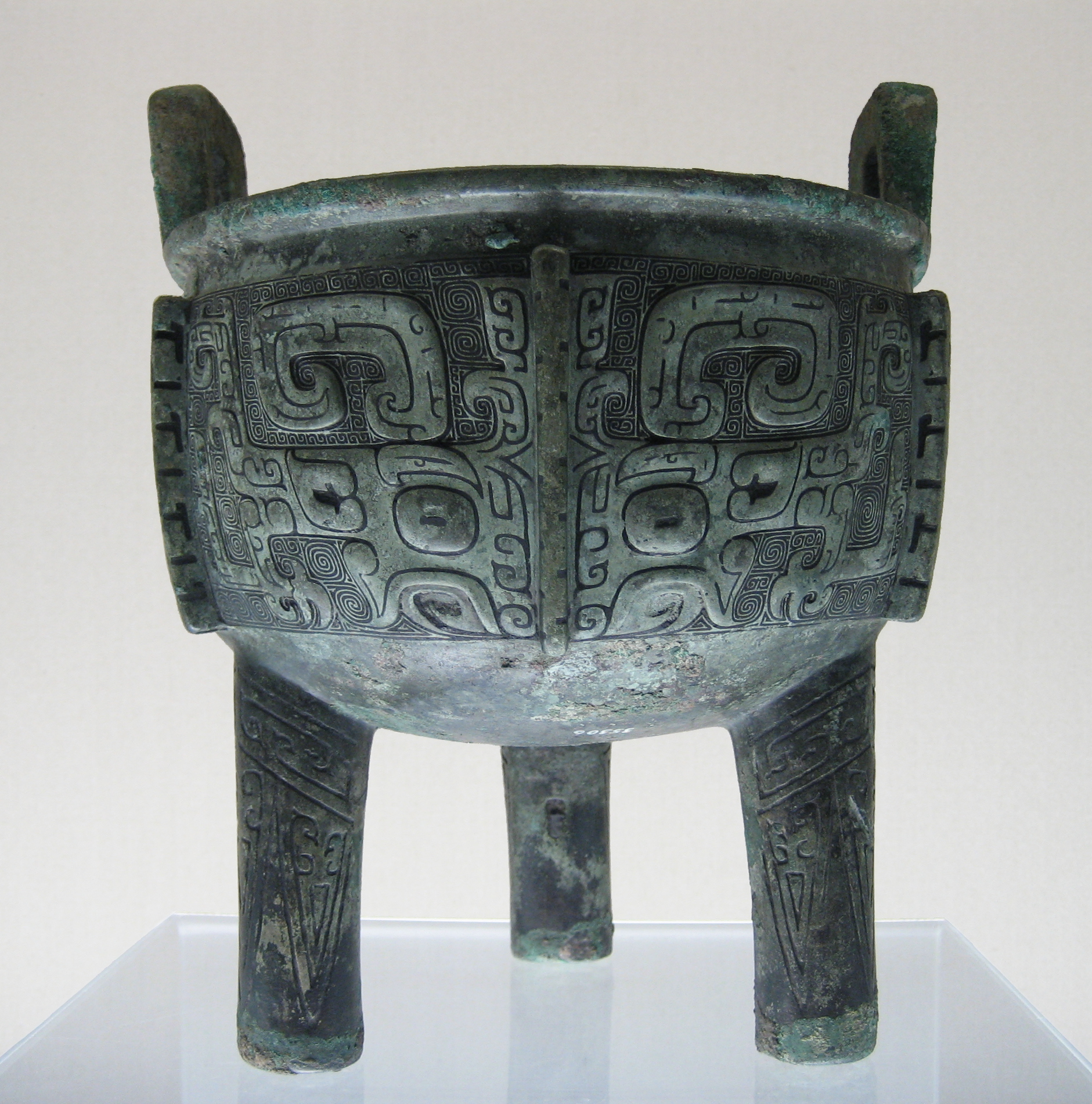 |
This is a tripod cauldron or Ding from the late Shang Dynasty. Only the Son of Heaven (天子) was entitled to have nine Dings.
The use of the nine Dings to offer ritual sacrifices to the
ancestors from heaven and earth was a major ceremonial occasion. It symbolizes the highest national political
power. King Zhuang of Chu (楚庄王) inquired the "weight of the Dings" (问鼎中原) with his army camped outside of the Zhou Capital. He was rebuffed by the Zhou minister Wang sunman (王孫滿). Wang told him that according to the Rites of Zhou (周礼), he should not ask for the weight of the Ding. He could have taken over the Zhou, but withdrew his army went back to Chu. Later on King Wu of Qin (秦武王) lost his life trying to carry the Ding.
The Chu Silk Manuscript is from the Warring States period, around 475 to 221 B.C., a crucial era when lasting Chinese traditions like Confucianism and Taoism took shape.CreditCollection of the Arthur M. Sackler Foundation, New York, photograph courtesy of the Arthur M. Sackler Gallery, Smithsonian Institution, Washington, DCIn 299 BC, King Zhuang of Chu (楚庄王)'s son King Huai was held hostage by his own sister Miyue (羋月) married the King of Qin, the Queen Dowager Xuan (宣太后), who was the regent for her young son King Zhao of Qin. She was supported by her brothers Wei Ran and Mi Rong (羋戎), as well as two other sons Prince Yun (公子悝) and Prince Shi (公子市), all together known as the "Four Nobles" (四貴). Miyue from Chu played a key role weakening six other states including her home country Chu, the strongest at the time. The Western frontier of Yiqu (義渠) had always been trouble for Qin. So she married the king of Yiqu and had two sons with him. At the same time, with the help of Yiqu, her son the King was aggressively weakening rival warring states in the east and south. But when the Yiqu king's two sons were getting older, they wanted a piece of the pie as well. In 272 BC, Miyue, the Queen Dowager Xuan lured the Yiqu King to Ganquan Place and killed him and their two sons, annexing his entire territory into the newly established commanderies of Longxi and Beidi (北地). The Xirong threat was removed for good. Miyue was heart broken that he had to bill them for the goodness of Qin; she buried them together with a great amount of treasures. She also built her own tomb site in front of this mountain, she named Li Mountain (骊山), Li (骊) means black horse which was the King Yiqu's Chinese name. This site became Qin's royal tomb site (骊山园). Recent archaeologists excavated a site with 21 mystic circle pits, a total area of 2230 square meters, believed to be hers. Also, recently published findings have put the origin of China’s famous Terracotta Warriors into question, the true owner is also Miyue. The Legend of Miyue ,the first two episodes (81 total) of a new Chinese drama attracted a record 700 million hits in just 24 hours. Some Idioms meant to make fun of the Chu people still exist today. How a Chinese Manuscript Written 2,300 Years Ago Ended Up in Washington – The New York Times 
买椟还珠 which means a Chu person who was selling pearls in a wooden box, but he made this box so beautiful that the buyer from Zhen (郑) bought the box, but returned the pearls.

刻舟求剑 which means a Chu person who lost his sword while crossing a river. He made a mark on the boat. When the boat landed on the other side, he jumped into the water from the mark looking his lost sword.

画蛇添足which means a noble Chu person drew a snake with his feet. But today's finding proves he was right (Four-legged snake fossil stuns scientists).
Instrumental Ensemble - Music of the Chu State 楚商 |
 |
| My mother’s ancestor Zi Lan (子蘭) |

After Qin took over Chu, unlike the other family of Xiong (熊), Shangguan moved to Longxi (陇西), Tien Sui (天水一带) in Gansu, northwest China, since Zi Lan’s (子兰) wife was the princess of Qin. Tianshui (“heavenly water”) in Gansu, the Birthplace of Chinese Civilization, was the heartland of the Qin, and Shangguan quickly became a big family there. Tien Sui became the root for all Shangguan. The phrase 望出天水, 源自子兰。 means look up at the heavenly water, Shangguan from Zi Lan.
See today's Tian Shui Part one Tian Shui Part two. More Tien Sui video.
When I was reciting Qu Yuan’s poems as a school girl, I never knew our Shangguan Zi Lan contributed to his death. All of the Chinese knew him and felt sorry for him, except for our Shangguan family. As a poet, our family respected him; he was not respected as a ruler. He could only dream about his country Chu, not really able to win. Sima Qian went overboard about Qu Yuan to express his own feeling towards the ruling power since he was also severely punished and exiled. The King of Chu and his sons, including Zi Lan, fought hard to keep their country, especially after Zi Lan’s father died under Qin. Still China was ready to unite and no one could stop it, not my father’s Han or my mother’s Chu.
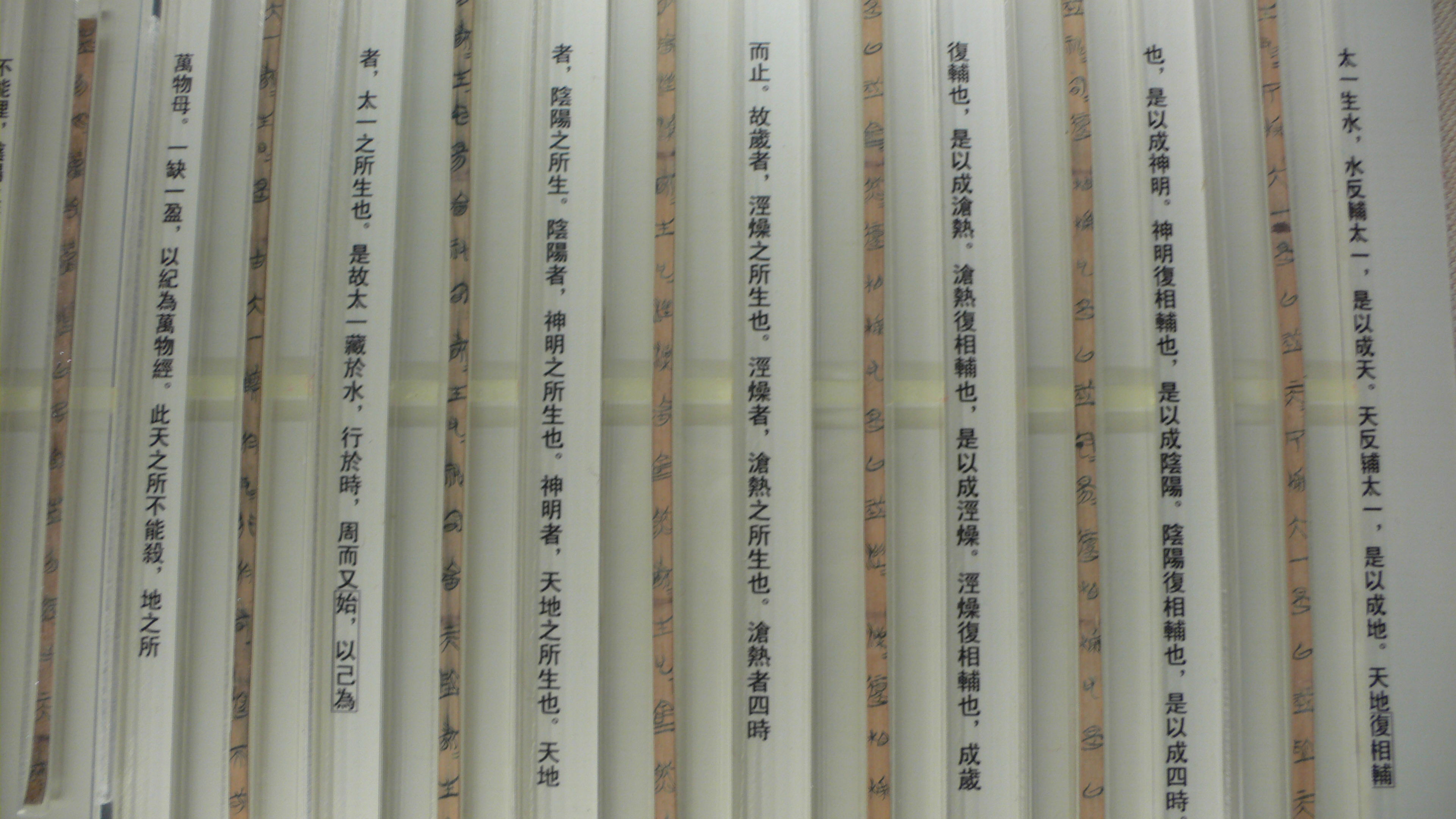 |
| The oldest Book (total about 804 bamboo strip): "The Great One Generates Water", from the teacher's tomb, unearthed in 1993. He taught royal princes Zi Lan’s (子兰) and his older brother King Qingxiang of Chu (楚頃襄王). |
Han Peng (韩凭) committed suicide after the king took his beautiful wife away from him. The story goes that is wife wore a very fragile and old dress while attending the king’s ceremony on a high stage. She jumped down. The king and his people tried to grab her dress. Her dress broke into pieces and each piece became a beautiful butterfly that flew away. The Chinese phase 韩妻裙化蝶 means the dress of Peng’s wife turned into butterflies. This was the origin of the ending of the Chinese classic “Butterfly Lover” story. The lover’s spirits emerged from the grave and turned into a pair of beautiful butterflies. Han Peng’s wife had wished she could be buried with her dead husband, which made the king mad. He buried her apart from her husband on the opposite side so they could only see each other. Later a tree grew on each tomb and the roots and branches of these two trees entangled and grew together. The locals called these “sim-twin” trees 连理树. The phase 相思树 means the two trees are thinking about each other. On these two trees lived two birds, male and female, that sang everyday so people called the birds 鸳鸯鸟 symbolizing togetherness and love.
Qin_Dynasty 秦朝 (221-206 B.C.), ruled by Ying (嬴姓). Qin Shi Huang (秦始皇) eventually took over all kings and declared himself the first Emperor, becoming the first sovereign ruler of a united China. Qin united China, but only ruled China for 12 years. He was the first Emperor. Qin used Han Fei’s rule of law. He controlled all of his territories without mercy. He built the Great Wall of China. His underground Terra Cotta Army in my father's hometown Xi'an (西安), built to protect him after death, was not discovered until 1974. Newly discovered Mi month tomb suggested that the Terra Cotta Army site was closer to the great grandmother of Emperor Qin, it was protecting the Empress Dowager Xuan (宣太后). “The hairstyle, the ancient Chinese characters found on some unearthed warriors and other evidence indicate the owner of the warriors was Empress Dowager Xuan,” Chen said.
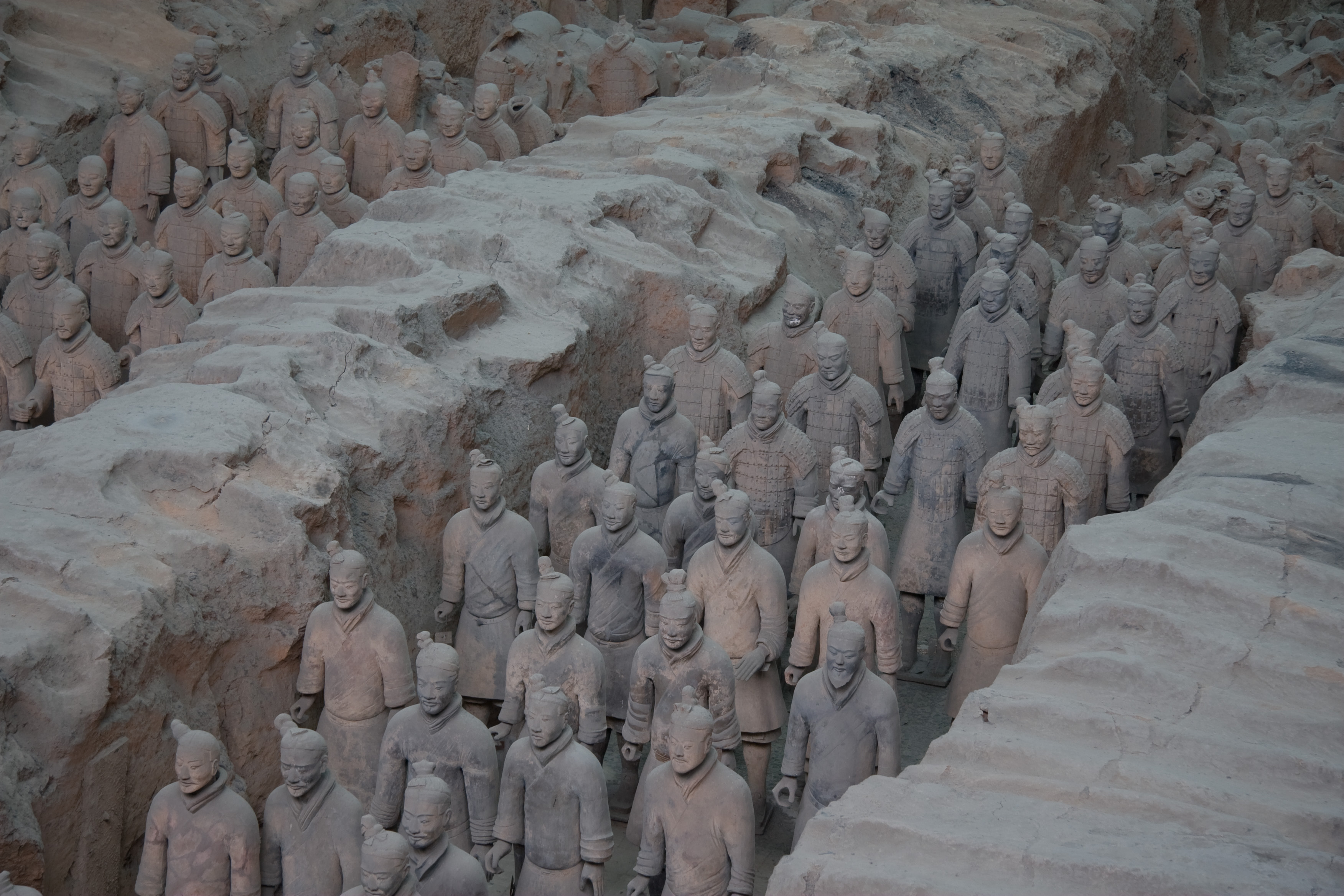
A closer look at Qinshihuang's tomb Part 1
A closer look at Qinshihuang's tomb Part 2
*** my last name Han (韓)and Han Dynasty/Han nationality (汉) sounds same but writes differently.
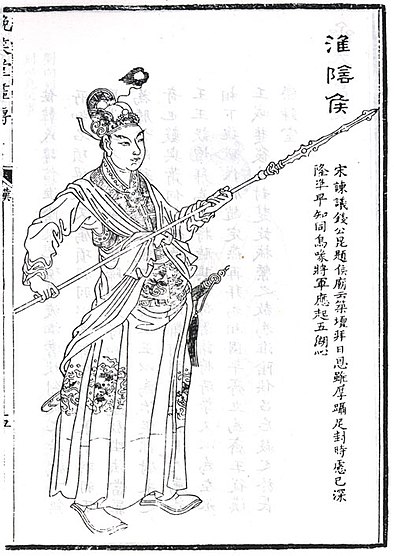 |
| Han Xin (韩信?-190 B.C.) |
He took her advice, and joined Xiang Yu’s (项羽) army as a guard in front of his door. After a few years, Xing Yu did not promote him, so he went to Liu Bang. Again Liu Bang (刘邦) did not notice him, but Liu Bang’s adviser, Xiao He (萧何), did. When everyone started to leave Liu Bang after he kept losing battles against Xiang Yu, Han Xin decided to leave as well. Xiao He went after Han Xin to stop him from leaving. Liu Bang thought Xiao He also left, so he became very sad. Then Xiao He came back with Han Xin. The phrase “萧何月下追韩信” means Xiao He chased Han Xin under the moonlight,” which made many operas and plays. He told Liu Bang to use Han Xin since Han Xin would be the kind of person for whom one had to wait on for another thousand years. The phrase “国士无双” means no second one in the world. He will make one successful. Liu Bang could not see how great Han Xin was, but he had to go along with him, since he did not want to lose him. He wanted to keep everything quiet, since there were so many other capable older military commanders. Han Xin wanted the formal ceremony for the first commander or he would walk away. Liu Bang did not have a choice, so he went along again. Han Xin gave Liu Bang his plan on how to defeat all the other countries including Xiang Yu.
Han Xin did the job so well that poor Xiang Yu and his lover committed suicide out of despair. Han Xin surrounded “十面埋伏” Xiang's forces not just on four sides, but ten sides by cutting off all his supplies. He ordered his army to sing Xiang Yu’s national anthem “四面楚歌.” Xiang Yu’s army was already surrounded without any food or water, but upon hearing their national anthem sung by their enemy, they became heartbroken and started crying. Xiang Yu’s lover committed suicide after the last drink with him since she could not join Xiang Yu fighting her way out, and did not want to be captured by their enemy. The last goodbye called “霸王别姬” in Chinese means “Farewell My Concubine” that has been made into several operas and plays ever since. It is a great classic love story in China.
Xiang Yu gathered his remaining troops and broke through Han and Liu Bang’s enclosure to reach the Wu River (乌江). His boat was waiting for him. He could have crossed the river to his hometown to rise again since he was only thirty years old and a well-loved, good man in his western Chu “西楚” country. His reputation was much better than Liu Bang’s, and is still viewed as better today by the Chinese people. What he saw on the rock before the crossing changed his mind. Millions of ants formed a sentence “Xiang Yu’s Death Place.” He was heartbroken after seeing his lover die and most of his men die. Now god had sent him a message asking him to die there. He must die there; he could not face his countryman, so he slit his throat with his own sword. It turned out that Han Xin had used the brush with honey and wrote the sentence on the rock since he knew Xiang Yu would have to cross the river there.
This did not stop his wife Empress Lu (呂). With Xiao He’s help, his wife Liu tricked Han Xin into entering the Palace of Everlasting Joy (This is the same Palace where the Shangguan Empress died later from natural causes) while her husband was not around. The fact was after killing of Han Xin, Liu Bang named his favorite young brother as the King of Chu State. He then placed all his own Liu family members into key positions, although none of them had fought and won his country for him.
One day, a Liu king, senior to the Emperor, came to see him. Liu Che sent Han Yi with his carriage and hundreds of people to greet him. So Han Yi flew by the Liu king and did not even notice he was kneeling on the ground since he thought it was the Emperor Liu Che. He was kneeling on the ground for over half an hour and no one had asked him to get up. After he learned that it was Han Yi, he cried to Liu Che’s mother and complained about how humiliated he was. Liu Che’s mother wanted Han Yi to die and blamed him for seducing his son. Liu Che knelt down in front of his mother and begged for her forgiveness, but it was to no avail. He ended up saying goodbye to his lover and having one last drink with her before Han Yi drank the poison.
Liu Che was very sad after Han Yi died. He brought Han Yi’s younger brother Han So (韩说) inside as his lover,hoping to find him in his little brother. His son, the Crown Prince, killed Han later. Lie Che was very upset at his son about this and other issues. He forced his son, the Crown Prince, to commit suicide and killed every one of his family members except one, who was born in prison, his great-great grandson. The jail keeper smuggled the baby out of prison and this baby eventually became an Emperor.
Huo (霍) was made the primary guardian of the young emperor who was 12 years old, even through Shangguan Jie was higher in rank because Huo’s uncle (霍去病) fought for Liu Che and earned great respect. His uncle died when he was twenty-three years old after winning impossible battles and greatly expanding China’s western frontier. There was a power struggle between the two. In the end, Hou killed Shangguan Jie (上官桀) and his son Shangguan An. Shangguan An’s wife, Hou’s daughter, had a daughter (who became empress at age six), and they also delivered their son Shangguan Xi (熙) after his death.
Although the Emperor had thousands of beautiful young girls, Hou stopped Emperor Liu from seeing anyone else other than his own granddaughter, Empress Shangguan. He even changed a rule to make all the girls in the Palace had to wear pants without any opening seam. The Emperor never learned how to dress or undress himself without others. Still his granddaughter did not become pregnant, and Emperor Liu died suddenly at age 21. Some said that the two were like brother and sister since they grew up together; others said Emperor Liu had old genes from his 70 year old father and was very weak. Empress Shangguan became Empress Dowager.
She survived her beloved Emperor Liu Bingyi (born in prison), and died when his son became Emperor at age fifty-two at the Palace of Everlasting Joy. She was buried nearby, but not next to her husband with a five meters wide path between their tombs, her tomb was larger than her husband’s. Clusters of jewelry and pottery were buried beneath beautiful trees and flowers along the path connecting the two of them.


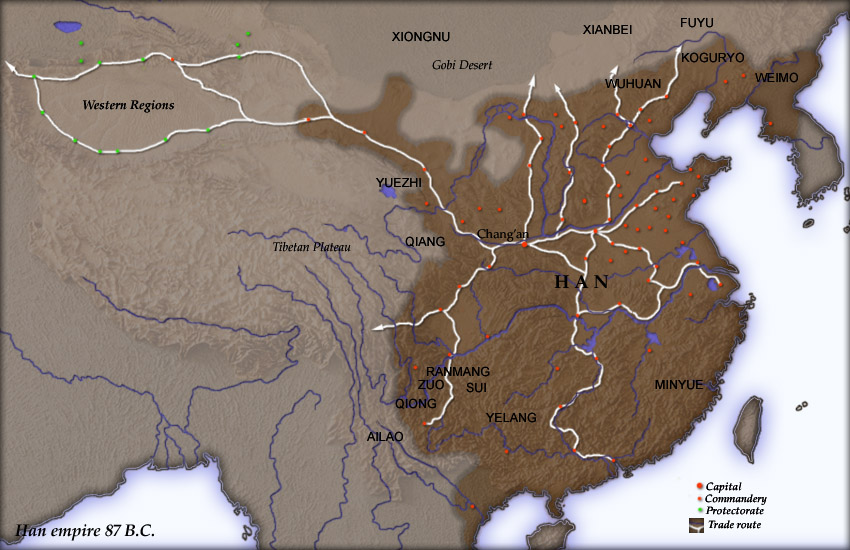 |
| Map of Han Dynasty |
Secrets of the Emperor's Tomb Part 1
Three Kingdoms 三国 (220–280)
Han Sou (韩寿) lived near my father’s hometown Nanyoung (南阳). He later became the source of one of the Four Romances in History (风流四事). It became a famous Chinese phrase for a secret romance after him 韩寿偷香, which means “Han Sou stole the precious fragrance and it shows.” Several love stories and plays were based on him, including The West-Wing Romance 《西厢记》 in the Tang Dynasty. Han Sou was a very handsome and well-educated young man. People thought he was so handsome that no one could be matched with him. The phrase “貌比潘安” means Han Sou was far better than Panan (潘安). (Panan was the most handsome man in Chinese history). When he walked on the street, men and women alike would stop to watch him.
Later, he went to work for Jia Chog (贾充217-282) who was an important official. Jia Chog had heard about Han Sou, but was not sure if he was smart enough to take the job. So he interviewed him in person; he was very impressed and hired him on the spot. He took him everywhere he went. Not long after, his youngest daughter, Jia Wu (贾午), noticed Han Sou. She would secretly watch and follow Han Sou. After a while, she became very ill and could not eat or drink. Her father was very concerned since the doctor could not find anything wrong with her. One day, Jia Wu told her maid that if she could help her trick Han Sou into her room, so that if she saw him once, her illness would be cured. So her maid did as asked. Jia Wu was indeed better right away. She was vibrant again like she used to be, which made her father and the whole family very happy. Then one day, her father Jia Chog and his people noticed the fragrance Han Sou wore. It alerted Jia Chog immediately; he was the only one who was supposed to know and have the fragrance because it was the Emperor’s gift to him.
The next thing alerting him was his own daughter. So he went home and asked his daughter to come to his study room alone. As he had expected, his daughter was the one who gave Han Sou the fragrant perfume. She and Han Sou were madly in love. Her daughter was also carrying Han Sou’s child. She would die if her father disapproved of their marriage. The poor father had no choice and hastened the two’s marriage. They had two sons, Han Jian (韓謐) and Han Wei (韓蔚).


Northern Wei (386-535) ruled by Xianbei people, the emperors' desire for Han Chinese institutions and advisors grew. Emperor Xiaowen set up a policy of systematic sinicization that was continued by his successors. Xianbei traditions were largely abandoned. The royal family took the sinicization a step further by changing their family name to Yuan. Marriages to Chinese families were encouraged. With this, Buddhist temples started appearing everywhere, displacing Taoism as the state religion. The temples were often created to appear extremely lavish and extravagant on the outside of the temples.
Han Frong (韓法容): Her tomb was discovered in 2011 in Datong City, China, by a team of archaeologists. Farong was laid to rest wearing fantastic jewelry, which included a necklace of 5,000 beads and "exquisite" earrings. The woman was buried, was the dynasty's capital until 494.

 |
| Her epitaph, found by the tomb entrance, reads simply, "Han Farong, the wife of Magistrate Cui Zhen" |
Han Zigao (韩子高 538-567). He was the "male Empress" ( 男皇后) of emperor Chen Qian (陳蒨). Empress in Chinese is gender-neutral, it means the person right after the emperor. Today, a fourteen houndred years later their tomb is discovered in Nanjing. Chen Qian loved Han Zigao whose family was a shoemaker. Han was gorgeous, white with naturally creaming curling hair. Chen Qian was a young general at time, the two felt in love at first sight. Han Zigao was 16-year-old, Chen Qian was 22-year-old.
Tang_Dynasty (A.D. 618–907) ruled mostly by the Li (李) family, interrupted by the Wu (武) family.
The dynasty was interrupted briefly by the Second Zhou Dynasty (690-705) when Emperor Wu Zetian (武则天) took the throne and changed the Tang to Zhou, becoming the first and only Chinese female Emperor. The Chinese title for Emperor (皇帝) is gender-neutral, although the rest of the emperors were men. Wu declared herself as Emperor, later forced to back down to Empress before she died. Her son changed Zhou back to Tang again. So the Tang Dynasty family Li was interrupted for 15 years under her family name Zhou. Empress (皇后) in Chinese literally means after the Emperor. Like Empress Cixi in China’s last dynasty Qing, she did not declare herself as emperor. She had the power of the emperor, even though her nephew was the real emperor was sitting upon the emperor’s chair. She could not change the dynasty like Wu. Its capital at Chang'an (present-day Xi'an) was similar to today’s New York City, a high point in Chinese civilization, the golden age of Chinese culture. Its territory expanded greater than during the Han Dynasty. Tang also had a strong cultural influence over neighboring countries such as those in Korea, Japan, and Vietnam. Han Chinese building architecture, the clothings and their writing systems still present today.
His grandfather Han Shao(韩紹) served as deputy minister under the Sui Dynasty, and his father Han Zhongliang (韩仲良) served as deputy minister of justice under Emperor Gaozu. He was later promoted under Emperor Gaozu's son, Emperor Taizong (Li Siming), to be minister of justice and was appointed as the Duke of Yingchuan, a title that Han Yuan later inherited as the chancellor. In 654, Han Yuan was given the title Yinqing Guanglu Dafu (銀青光祿大夫). In 655, he became Shizhong (侍中) -- the head of the examination bureau and a post considered as a chancellor. In addition, he was also a guardian of Emperor Gaozong's son and Crown Prince Li Zhong.
Wu was Li Zhi’s father’s concubine before, because of her beauty and intelligence. His father permitted her as a secretary. Wu had insight and knowledge of state affairs. Wu attracted the attention of Prince Li Zhi. In 649, Li Zhi’s father died and Wu was sent to Ganye Temple to become a nun. After Li Zhi ascended the throne, he called her back to the palace and gave her the title Zhao Yi (a type of Tang concubine). She killed her baby daughter and framed Empress Wang who did not have her own children, for the murder. So Wu made Li Zhi depose Empress Wang, and Wu took the Empress’ place herself.
Han Yuan (韩瑗) did not like Wu Zetian, somehow, he knew she could take over Li. He submitted a petition to Emperor Gaozong (Li Zhi), opposing the removal of his first wife Empress Wang and replacing her with his favorite concubine Consort Wu (later known as Wu Zetian 武则天) as the new Empress. Han was strongly against the Emperor’s choice of Wu and even cried bitterly during one meeting with Emperor Li Zhi, causing the emperor to remove him from the post, sending him into exile.
The first thing the new Empress Wu did was killing former Empress Wang. The next thing she did was submit a petition praising and rewarding Han Yuan for his loyalty to Emperor Li. Empress Wu made Han Yuan aware that she knew his opposition of her but promoted him anyway, keeping him under close watch and hoping he would change his mind about her. Han Yuan had resigned twice, yet, Han was twice rejected by Emperor Gaozong.
In 659, Empress Wu accused Han of being part of a treasonous plot. He died before Wu’s execution order came. Many years later, after Wu died, her son Emperor Zhongzong (Li Xian) cleared Han Yuan’s name and restored Han's titles according to Wu’s will. She knew Han Yuan was a loyal officer and wanted to correct her mistake so she could rest in peace.
 Shangguan Yi Shangguan Yi |
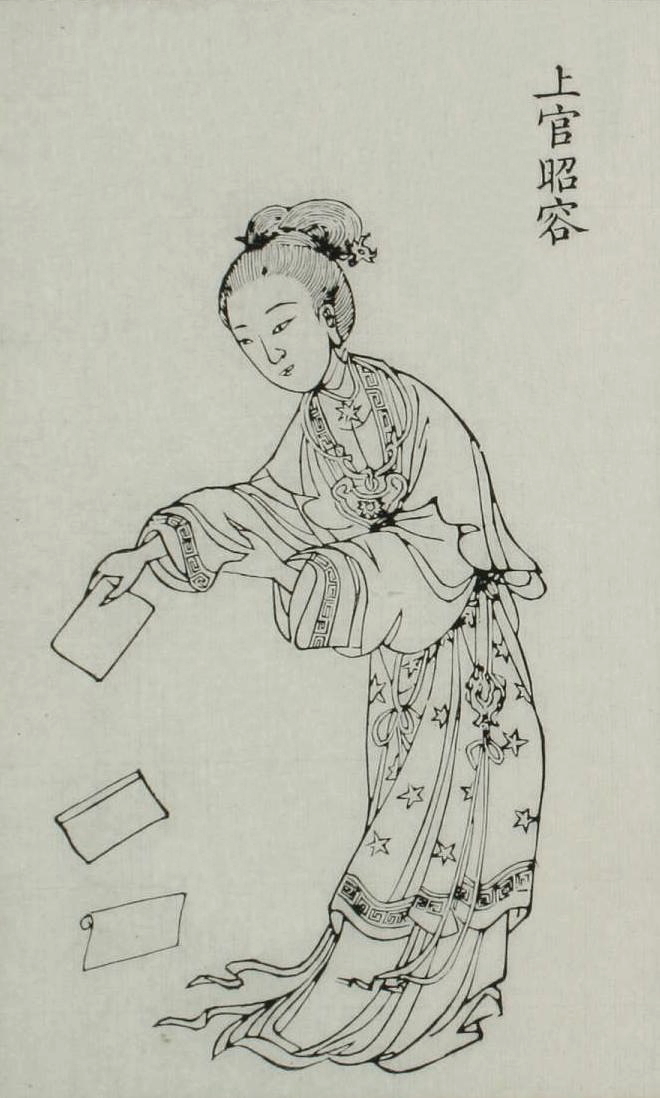


Shangguan Wan'er was in love with Wu’s oldest son, the Crown Prince (章怀太子) Li Xian (李贤), and all his younger brothers were jealous. Shangguan Wan'er was smart and had stunning beauty above everyone around her. She held great power from her grandfather and father inside of the Palace, and even she did not even know it. It was like a current under the calm surface. It said that whoever held onto Shangguan Wan'er would be the winner in the palace. She became the most important bridge between the Wu and the Li families after Wu took over.
Wu Zetian (武则天) was jealous at her own son and her worst nightmare would be the two against her. First, Wu cleared Shangguan Yi and Shangguan Tingzi’s names and blamed everything on her dead husband. Wu restored all the honors. Then, she asked Shangguan Wan'er to draft an edict deposing her of Crown Prince and sent him far away. Shangguan Wan'er was heart broken, but she did not have any choice, and only hoped the Crown Prince was strong enough to stay low outside until the right time, so he could return. Her heart turned cold after learning that the Crown Prince had committed suicide soon after. The Crown Prince left a poem about picking squash from the vine to his mother. It haunted her for the rest of her life. This poem became a warning for later emperors.
一摘使瓜好,再摘令瓜稀,
三摘尚自可,摘绝抱蔓归。
Wu Zetian was Wan’er’s idol since she was a little girl. She had great respect for her. She was so excited when Wu picked her and she swore that she would do her best to help her. She shared the same values and vision with Wu Zetian; she was willing to give up revenge for her father and grandfather even though she could easily kill Wu Zetian. In addition, Wu Zetian’s way impressed her that a woman could rule a country as a man usually did. She devoted all her life to working for Wu Zetian after the Crown Prince died.
Wan’er became the only and most powerful female chancellor in Chinese history; she had as much power as five male chancellors. From 698 when Wu was 74 years old, she gave almost all power to Wan’er over state affairs. The Chinese description of Wan’er was (处理百司奏表, 参决政务, 内掌诏命, 群臣奏议及天下事皆与之, 权势日隆), which means she was dealing with reports from all department, making decisions, and her powers increased everyday.
She had many love affairs, including a long relationship with Wu Zetian’s nephew and affairs with four handsome and talented young brothers outside of the palace. On one occasion, she was caught in bed with Wu Zetian’s lover, Zhang. Wu Zetian was so mad that she threw a sharp hairpin at her which left a scar on her forehead. Wu Zetian could have killed her, but she knew she loved her and she could not stay in power without her. Shangguan Wan'er drew a flower to cover her scar and the flower became a fashionable makeup–design for girls in the palace.
Wu Zetain’s grandson Li Longgi (李隆基) had a secret crush on Shangguan Wan'er when he was still a boy. One day, he saw Shangguan Wan'er and Wu Sansi fooling around. It broke his heart, he later became jealous and angry. He swore to himself that he would kill both. Shangguan Wan'er did not forget that look in his eyes for the rest of her life. She knew he would cause her death one day when he was in power. She only wished he could understand her, as a single woman in a high place trying to be successful in a man’s world.
Wu Zetian not only consulted with Shangguan Wan'er on the most official and important state affairs, but also consulted her about her personal affairs. She was her strength, especially after she turned 80. Wu Zetian faced the same problem as all the other emperors — her successor. She truly wanted the Wu and Li families to get along. She forced them together by arranging marriages between the families. That did not work; they just hated each other. Wu Zetain was so frustrated; at one point, she even considered making Shangguan Wan'er her successor; both realized that would not work since her name was neither Li nor Wu. She regretted that her Crown Prince Li Xian (李贤) committed suicide since he would have been the best choice at that time and Shangguan Wan'er would be the empress. Shangguan Wan'er performed an emperor’s job from time to time when Wu was not doing well in her old age. Shangguan Wan'er pushed Wu to return power back to the Li family as she saw no other choice.
Wu Zetian started Wu Ju Ren (武举人) which lasted 1000 years after her. The two women created a very important foundation for the future Li Longgi as one of the greatest emperors in Chinese history. They raised the whole country up on every front. They also made a lot of changes to raise women up higher. Tang women were granted the same rights and opportunities for education as men. The Complete Poetry of the Tang contains over 50,000 poems written by more than 2,000 poets. There were hundreds of famous female poets, including Shangguan Wan'er. Shangguan style provided much inspiration for Li Bai (李白), the most famous of all ancient Chinese poets. Unlike Li Bai, Shangguan Wan'er hid well. No one could sense her own true feelings from her poetry. It might have been the way she was brought up, the palace she lived in, the kind of work she did, and the men around her.
In the Tang Dynasty, writing poetry was not merely the privileged pursuit of noble women, but was also practiced by those of common origins. A woman could divorce her husband and remarry. The mourning days after the death of the mother were changed to match the death of father.
Wu Zetian ruled China 15 years after she declared herself as Emperor. In reality, she ruled China for 50 years while her husband was either too busy having affairs with women or sick in bed. In order to keep everything under control, she killed her own children, her sister, her niece, and so many others just like every other male emperor. Somehow, people looked at her differently. Even so, she buried a gold prayer sheet (rectangular, long 36.2 cm wide and 8 cm thick, less than 0.1 cm and weighing 228.5 grams) under large rocks in the mountains in Henan when she was 77 years old, ten years after she declared herself as emperor. It was an offering to God for forgiveness. A local farmer found the Gold Plate in 1982.
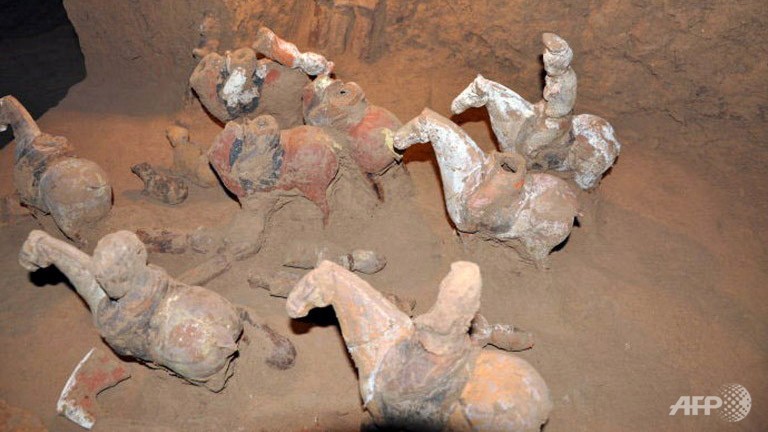
 |
| Polo was the favorite game for Wu and Shangguan Wan'er, it was introduced to China during this time from Persia. |
 |
| Tang Dynasty mural in the tomb painting Chinese courtiers on horseback playing a game of polo, 706 AD |
 |
| Wu Zetain's (武则天) Blank Tombstone:武则天墓之谜:40万大军挖不动的千年古墓 |
Emperor Li Xian also restored Shangguan’s family name. He awarded Shangguan Yi as the grandfather of the Chu State and promoted the rest of the Shangguan family. He even built the Shangguan Palace outside of his own Palace, so Shangguan Wan’er could come and go as she wished. Although she was an emperor’s woman, Shangguan Wan’er had many lovers, She gave away her long time lover Wu Sansi (武三思), Wu Zetian’s nephew, to Empress Wei to get her trust. Four Cui brothers (崔湜, 崔莅, 崔液, 崔涤) were in her own Shangguan Palace for her entertainment. As an emperor, if Li Xian wanted to see her, he had to exit his own Palace to visit her palace. Only Shangguan Wan’er’s got away with this in Chinese history. Also because of all this, she made a lot of enemies.
It shocked Wan'er when the Li Emperor suddenly dropped dead one day, and it was likely the first wife, the Empress Wei and their daughter who killed him. Empress Wei and her daughter wanted to be the next rulers. Shangguan Wan'er knew it would soon be all over. She did not believe there was going to be a second Wu Zetain. She tried her best to resolve the mess without a war. Still, Emperor Li’s first wife Empress Wei and their daughter were killed. Wan’er was killed too at 46 by Wu’s grandson Li Longgi, but his father Li Dan (李旦) was very sad upon Wan’er’s death.
Li Longgi had to kill Shangguan Wan’er; Wan’er had been helping Wu Zeitan and Wu killed his mother. The sight of her and Wu Sansi (killed in last rebellion by crown prince Li Chongjun) still made him angry. He was also aware of his own father’s love to Wan’er and he knew he was just a soldier for his own father. His father would be the next Emperor. He was sure his father would marry Shangguan Wan’er and make her his Empress. Shangguan Wan’er would help his father just like she helped his uncle and his grandmother. His father was not strong, but with Shangguan Wan’er’s and his aunt’s help, his father would be powerless and the worst part of it, his father would actually accept that happily. He did not have patience to wait, since Wan’er was only in her forties. He had to kill Shangguan Wan’er first, then his aunt, then force his helpless father to retire so he could become the next Emperor. Everything happened just like he planned.
Li Dan (李旦) was the next Emperor for about a year; the first thing he did was clear Shangguan Wan’er’s name. He restored Consort Shangguan's title as Zhaorong, and gave her the posthumous name of Huiwen (惠文) (meaning "civil and benevolent"). She was called Female Prime Minister (巾帼宰相). Since she served Emperor Wu and Li, she was also called beauty in two dynasties (两朝专美), similar to Shangguan Empress in the Han Dynasty as if history repeated itself almost exactly the same way. Only Wan’er learned Empress Shangguan’s lesson; she used her talents to their fullest extent. She left her full name in the Chinese history; most empresses only left their surname. No historical record on where she was buried, archaeologists discovered her 1,300-year-old tomb 2013.
A year later, Li Longgi (李隆基) became the next Emperor and his father retired. He was very sad after he had learned that Shangguan Wan'er had devoted all her life to balance the power struggle between his two families. Looking through what she had left behind, he regretted what he had done. Her poems moved him so much as if he finally understood Wan’er. He ordered a compilation of Shangguan Wan'er’s works into 25 volumes (唐昭容上官氏文集). He was the only emperor who helped a woman he killed by publishing her books. Some still exist today. My favorite is The Moaning (complaining) of the Colorful Book (彩书怨)
叶下洞庭初,思君万里余。露浓香被冷,月落锦屏虚。
欲奏江南曲,贪封蓟北书。书中无别意,惟怅久离居。
When first leaves fall on Lake Dongting,
I long for you, thousands of miles away.
In heavy dew my scented quilt feels cold,
At moonset, brocade screen deserted.
I would play a Southland melody
And crave to seal a letter to Jibei.
The letter has no other message but
This misery in living long apart.
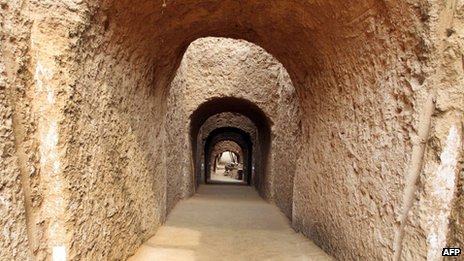
Reading today's news, Sept 10th, 2013, I found this best gift for my birthday. Archaeologists may have actually found Shangguan Wan’ers tomb in my father's home province Shaanxi. The Shangguan family waited 1303 years for this since no one knew what happened to her. The tomb is near the new airport (西安咸阳). According to the unearthed epitaph, Shangguan Wan'er was buried in August 710. the tomb is very close to Wu Zetian's mother and her granddaughter's tomb. The area was the burial ground for Royals since the Han Dynasty. The archaeological survey found a multi-slope ramp leading to a single-chamber tomb. The tomb faces South, and is 36.5 meters long, 10.1 meters deep, with five patios, five sky lights, and four holes. Epitaphs placed within the corridor are well preserved, the cover bearing the title "Grand Tang Zhao Rong Shangguan," in Zhiwen regular script, nearly a thousand words, recording Shangguan Zhao Rong's life, age, burial place, and other information. But no remains of coffin and body (Moved by her family for second burial?). The bone found inside turned out to be cow's bone. It might have been destroyed later by Li Longgi (李隆基) after he killed his aunt Princess Taiping (太平公主)since she and Waner's were so close in life.


夫道之妙者,乾坤得之而为形质;气之精者,造化取之而为识用。挻埴陶铸,合散消息,/不可备之于人,备之于人矣,则光前绝后,千载其一。婕妤姓上官,陇西 上邽人也。其先/高阳氏之后。子为楚上官大夫,因生得姓之相继;女为汉昭帝皇后,富贵勋庸之不绝。/曾祖弘,隨〔隋〕藤〔滕〕王府记室参军、襄州总管府 属、华州长史、会稽郡赞持、尚书比部郎中,与/榖城公吐万绪平江南,授通议大夫。学备五车,文穷三变。曳裾入侍,载清长坂之衣冠;/杖剑出征,一扫平江之 氛祲。祖仪, 皇朝晋府参军、东阁祭酒、弘文馆学士、给事中、太/子洗马、中书舍人、秘书少监、银青光禄大夫、行中书侍郎、同中书门下三品,赠中书令、/秦州都督、上柱 国、楚国公、食邑三千户,波涛海运,崖岸山高,为木则揉作良弓,为铁则/砺成利剑。采摭殚于糟粕,一令典籍困穷;错综极于烟霞;载使文章全盛。至于跨蹑簪 /笏,谋猷庙堂,以石投水而高视,以梅和羹而独步,官寮府佐,问望相趋,麟阁龙楼,辉光/递袭,富不期侈,贵不易交。生有令名, 天书满于华屋;没有遗爱, 玺诰及于穷/泉。父庭芝,左千牛、周王府属,人物本源,士流冠冕。 宸极以侍奉为重,道在腹心;王/庭以吐纳为先,事资喉舌。落落万寻之树,方振国风;昂昂千里之驹,始光人望。属楚国/公数奇运否,解印褰裳,近辞 金阙之前,远窜石门之外,并从流迸,同以忧卒。赠黄/门侍郎、天水郡开国公、食邑三千户。访以荒陬,无复藤城之榇;藏之秘府,空余竹简之/书。婕妤懿淑天 资,贤明神助。诗书为苑囿,捃拾得其菁华;翰墨为机杼,组织成其锦绣。/年十三为才人,该通备于龙蛇,应卒逾于星火。 先皇拨乱返正,除旧布新,救人疾/苦,绍天明命。神龙元年,册为昭容。以韦氏侮弄国权,摇动 皇极。贼臣递构,欲立爱/女为储;爱女潜谋,欲以贼臣为党。昭容泣血极谏,扣心竭诚,乞降 纶言,将除蔓草。/先帝自存宽厚,为掩瑕疵,昭容觉事不行,计无所出。上之,请擿伏而理,言且莫从;中之,/请辞位而退, 制未之许;次之,请落发而出,卒为挫衂;下之,请饮鸩而死,几至颠坠。/先帝惜其才用,慜以坚贞,广求入腠之医,纔救悬丝之命,屡移朏魄,始就痊平。表请 退/为婕妤,再三方许。暨 宫车晏驾,土宇衔哀。政出后宫,思屠害黎庶;事连外戚,欲倾/覆 宗社。皇太子冲规参圣,上智伐谋,既先天不违,亦后天斯应,拯 皇基/于倾覆,安 帝道于艰虞。昭容居危以安,处险而泰。且陪 清禁,委运于乾坤之/间;遽冒铦锋,亡身于仓卒之际。时春秋四十七。 皇鉴昭临, 圣慈轸悼,爰造 /制命,礼葬赠官。太平公主哀伤,赙赠绢五百匹,遣使吊祭,词旨绸缪。以大唐景云元年/八月二十四日,窆于雍州咸阳县茂道乡洪渎原,礼也。龟龙八卦,与红 颜而并销;金石/五声,随白骨而俱葬。其词曰: /
巨阀鸿勋,长源远系,冠冕交袭,公侯相继。爰诞贤明,是光锋锐,宫闱以得,若合符契。其一。/潇湘水断,宛委山倾,珠沉圆折,玉碎连城。甫瞻松槚,静听坟茔,千年万岁,椒花颂声。其二。/
悬案新解有惊奇:上官婉儿墓里的秘密


Han Yu (韩愈768-824) was a poet. He was the first among the Eight Great Masters of the Tang and Song Dynasties. Song Dynasty poet Su Shi praised Han Yu’s poem, which raised standards after eight dynasties of literary weakness.

Han Yu was a strong believer of Taoism (the native religion of China). He wrote his celebrated “Memorial on Bone-relics of the Buddha.” This protest against Buddhist influence on the country was uncompromising and disrespectful, and nearly personally insulting to the Emperor. Han Yu was dismissed and exiled to Chaozhou, Fujian. While there, he helped the local people get rid of bullies, released slaves, started schools, and killed most crocodiles (so many caused problems) in the river, and organized locals to build dams to stop flooding. This river was named after him. Today it still called Han Jiang, its upper stream was the Ting River, the Mother River of the Hakka from where my mother’s family came. Although most were Buddhist, they loved and respected what he had contributed to the local area during his short stay. The locals built a statue to remember him. After a number of their distinguished government posts, he died at the age of fifty-six in Changan in 781. There is a memorial Dou Temple in his name on the top of Qinling Mountain at 3500 meters elevation. My father had visited it. His hometown has a memorial as well.
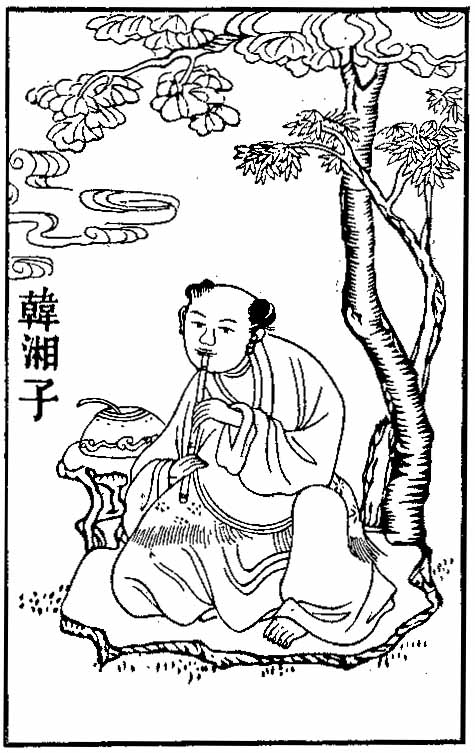
His nephew Han Xiang Zi (韓湘子) was one of eight “immortals” (son of an angel) or one of eight Xiang Zi in Chinese history. Han Xiang Zi lost his parents when he was a child. Han Yu took care of him; he was not a good boy and did not want to go to school. He loved gambling, women, and was drunk all the time. When he was 20, Han Yu wanted him to return to his roots for a visit, hoping he would finally grow up. He was supposed to go back to his hometown, but he never went back to Changan. On the way home, he met and followed two monks; he lived in the temple for the next 20 years.
When he came back to visit his uncle Han Yu, Han Yu was overjoyed. He gathered a lot of friends to welcome him home, but they had a problem when they ran out of wine. Han Xian Ze asked them for an empty wine jar and somehow the jar filled up with wine right in front of everyone’s eyes. He also made flowers bloom in January in freezing weather. He also predicted what would happen to his uncle Han Yu, when and where it would happen. He asked his uncle to join him back at the temple. His uncle refused and everything happened just like his nephew told him.
 |
| Han Guochang's (韓国昌) family tombs still protected today as a National Cultural Heritage Site |
Part 1- Architecture of prosperous Tang
Part 2- Dance of prosperous Tang
Part 3- Painting of prosperous Tang
Part 4- Rhapsodies and poems of Prosperous Tang
Part 5- Calligraphy of Prosperous Tang
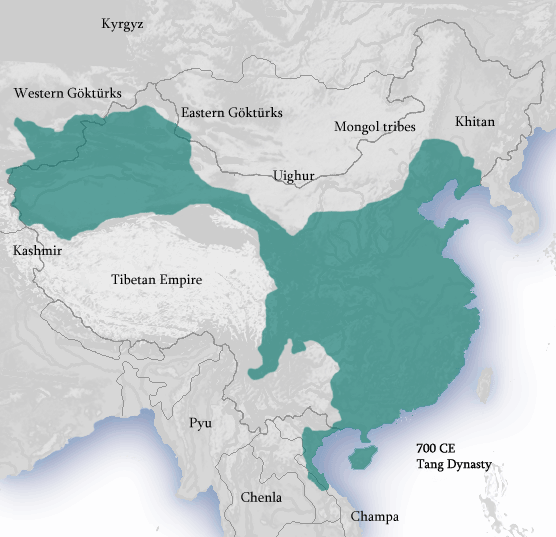 |
| Map of Tang Dynasty |
Song ruled by Zhao (赵姓), Liao, Jin, and Western Xia Dynasties (A.D. 960–1234)
Shanguguan Zhen (上官正) (his Pseudonym name was Chong Qing (常青); he was in charge of the Jianmen(剑门都监) in the Northern Song Dynasty between (993-996). Sichuan merchants Wang Xiao Bo(王小波) and Li Suen (李顺) raised over 200,000 people to fight against the Song government’s heavy taxes. Shangguan Zhen brought his Song army and crushed the uprising, killing more than 30,000 and arresting and executing Wang and Li.
Han Dezong (韩德让 941-1011)’s grandfather Han Zhigou (韩知古) was captured by the Liao (Khitan People) and later became an official working for the Liao. His father Han Quci (韩匡嗣) was the king under the Liao Dynasty (秦王). When Han Dezong was young, he was engaged to Xiao Zuo (萧绰 953-1009), a Khitan. But Xiao Zuo married the Jingzong Emperor and became the Empress. Han Dezong married to Li. Jingzong died in 982 returning from a hunting trip. His son Emperor Shengzong was only 12 at the time. Therefore, Han Dezong was back in the Empress's life. She had her people kill Han's wife, Li, with poison. Then, she had Han move into her palace and marry her, gave him a Khitan name. She even had her son the Jinzong Emperor call Han Dezong father. Han was a great military commander; he helped her and the young Emperor stabilized the Liao. He helped her rule the country over 27 years before turning the power over to her son. Under their rule, most slaves were liberated; it was the golden age of the Liao Dynasty. ( 韩昌) (神秘山寨).
 |
| First half section of the Night Revels of Han Xizai, 12th century remake, view from right to left |
 |
| Second half section of the Night Revels of Han Xizai, 12th century remake |
 |
| The "Four Generals of Zhongxing" painted by Liu Songnian during the Southern Song Dynasty. Han Shizong is the fifth person from the left. Yue Fei is the second person from the left. |
People in Sichuan fought the Mongols for over 10 years. In August 1259, Mengke Khan died on Mount Diaoyushan of Hezhou in Sichuan after failing to take over a Song castle.The Mongols called off the campaign, which delayed Southern Song from being taking over. Later in 1279, the Mongols avenged the shame of Mengke Khan's possible bombardment death by killing 1.4 million residents of Chengdu city. This was the first devastation of Sichuan. When Mongols barely took over southwest after Sichuan, Ming army already came after them. Many Mongols trapped in the mountains with Ming army deadlocks ever since. Today's hot pot is everywhere in Sichuan, but hot pot originated from the Mongols. There are still descendants of the Mongols and Ming army living. They kept their traditions.
Han Shantong (韓山童) led the White Lotus Society, north of the Yellow River which became the center of anti-Mongol sentiment. In 1351, the society plotted an armed rebellion, but the plan was disclosed and Han Shantong was arrested and executed by the Yuan government. Han's son, Han Lin'er (韓林兒) succeeded his father and established the Red Turban Army. Other Han (汉)rebels south of the Yangzi River revolted under the name of the Southern Red Turbans. One of the more significant Red Turban leaders was Zhu Yuanzhang(朱元璋). At first, he supported Han Liner to stabilize his northern frontier. Then, he defeated his rivals Chen Youliang, Zhang Shicheng, and Fang Guozhen, one by one, although he accepted Han Lin’er as the emperor. In 1336, he sent his men to sabotage Han Lin’er’s boat drowning Han Lin’er in the Yangzi River. This killed the only chance for our Han to become Emperor. Calling for a racial revolution to overthrow the Mongols and restore the Han Chinese, Zhu gained popular support. In 1368, Zhu Yuanzhang proclaimed himself emperor in Yintian. China was unified again under the Han (汉) Chinese. *** my last name Han (韓)and Han nationality (汉) sounds same but writes differently.
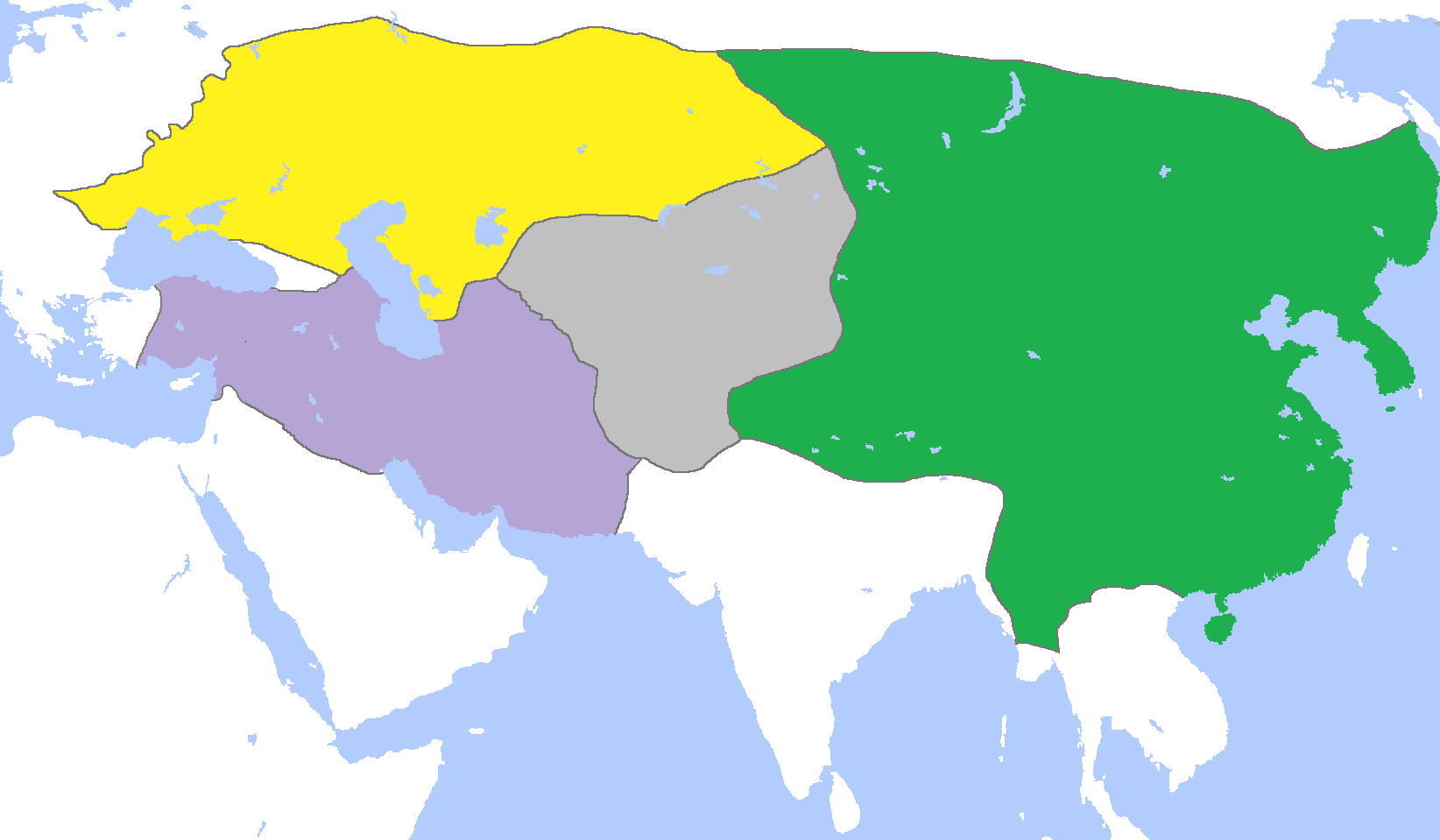
Descent of Genghis Khan
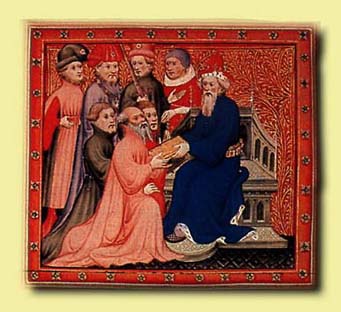

Ming_Dynasty ruled by Zhu (朱姓) 明朝 (1368–1644)
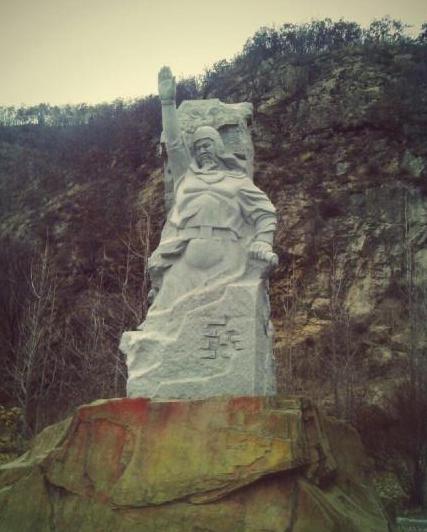 |
| Han Bin (韩斌1429-1500) |
 |
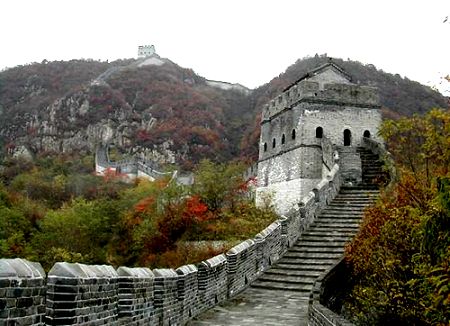
| In 1467, Han Bin (韩斌) bulit the Hushan Great Wall (虎山長城), the most easterly known part of the Great Wall of China. |
Shangguan Boeta (上官伯达1403-1424) was famous painter in Ming Dynasty from Saowu, Fujian. His paintings are world-renowned, such as “thousand birds look up to the phoenix” (百鸟朝凤图). A lot of his paintings, however, were burned with the temple (金陵大报恩寺) in Nanjing.
The Purple Gold Palace (紫禁城) was built according to stars. From top looking down, the whole structure spells the Chinese word Guo (國) meaning country. The name was changed to Gu Gong (故宮) which means Former (Old) Palace in Chinese, after the last emperor was out of the Purple Gold Palace. Forbidden City again was given by the non-Chinese. Old Chinese and the younger ones call the Purple Gold Palace or Gu Gong, and foreigners call it the Forbidden City (Part 1) (Part 2) (Part 3) (Part 4) (Part 5) (Part 6) (Part 7) (Part 8) (Part 9) (Part 10).
 |
| Empire of the Great Ming |
The second of devastation of Sichuan was done by Zhang Xianzhong from Ming and anti-Manchu forces. A massive resettlement program (many were forced) was initiated around 1670 and lasted more than two centuries. Millions of people from Hubei, Fujian, Jiangxi, Guangdong, Shaanxi and other provinces resettled in Sichuan. 70-80% of the population of Sichuan was reportedly non-native, and as much as 85% a century later. My mother's ancestors from Fujian were among them. They resettled in 1724.
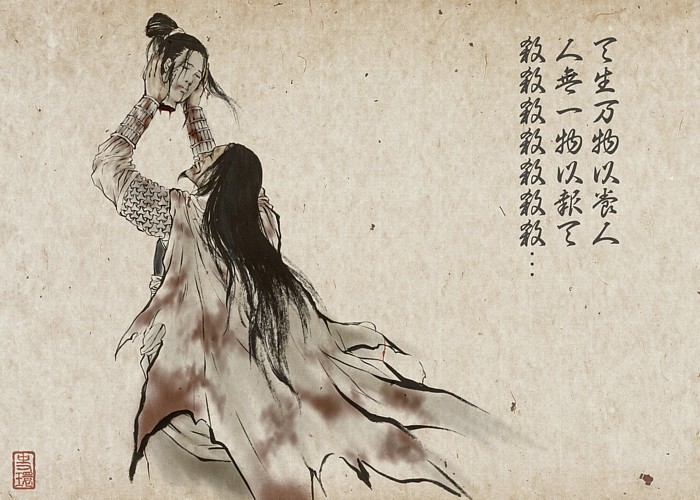
Man has nothing good with which to recompense Heaven.
Kill. Kill. Kill. Kill. Kill. Kill. Kill.

 |
| The 1734 map compiled by d'Anville based on the Jesuits' geographic research during the early 1700s |
 |
| Map of China in 1759 |
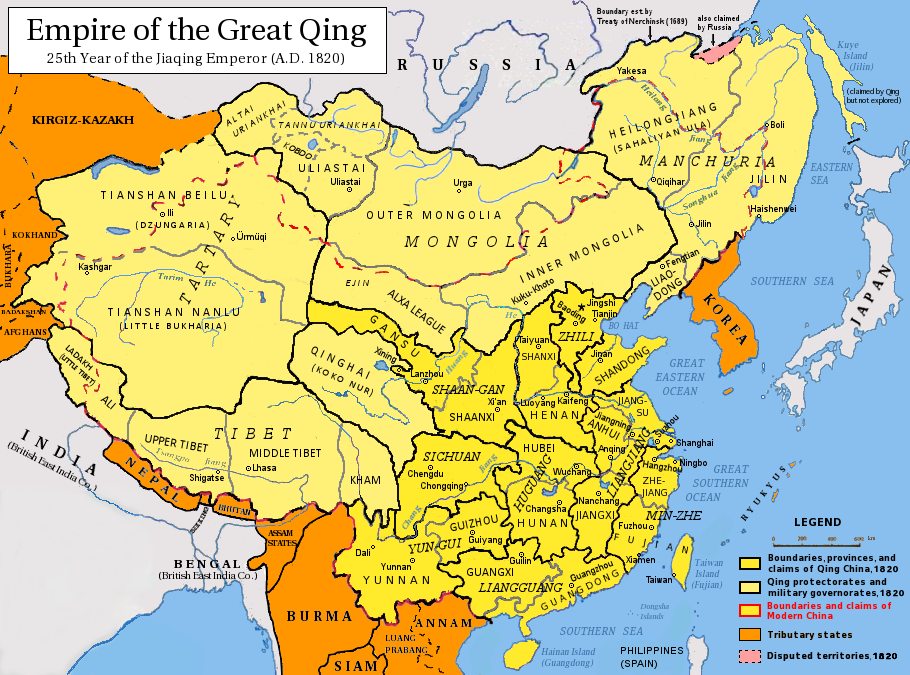 |
Qing Dynasty in 1820, with provinces in yellow, military governorates
and protectorates in light yellow, tributary states in orange. |
Opium War, the untold truth by by Toyotomi Hideyoshi
 |
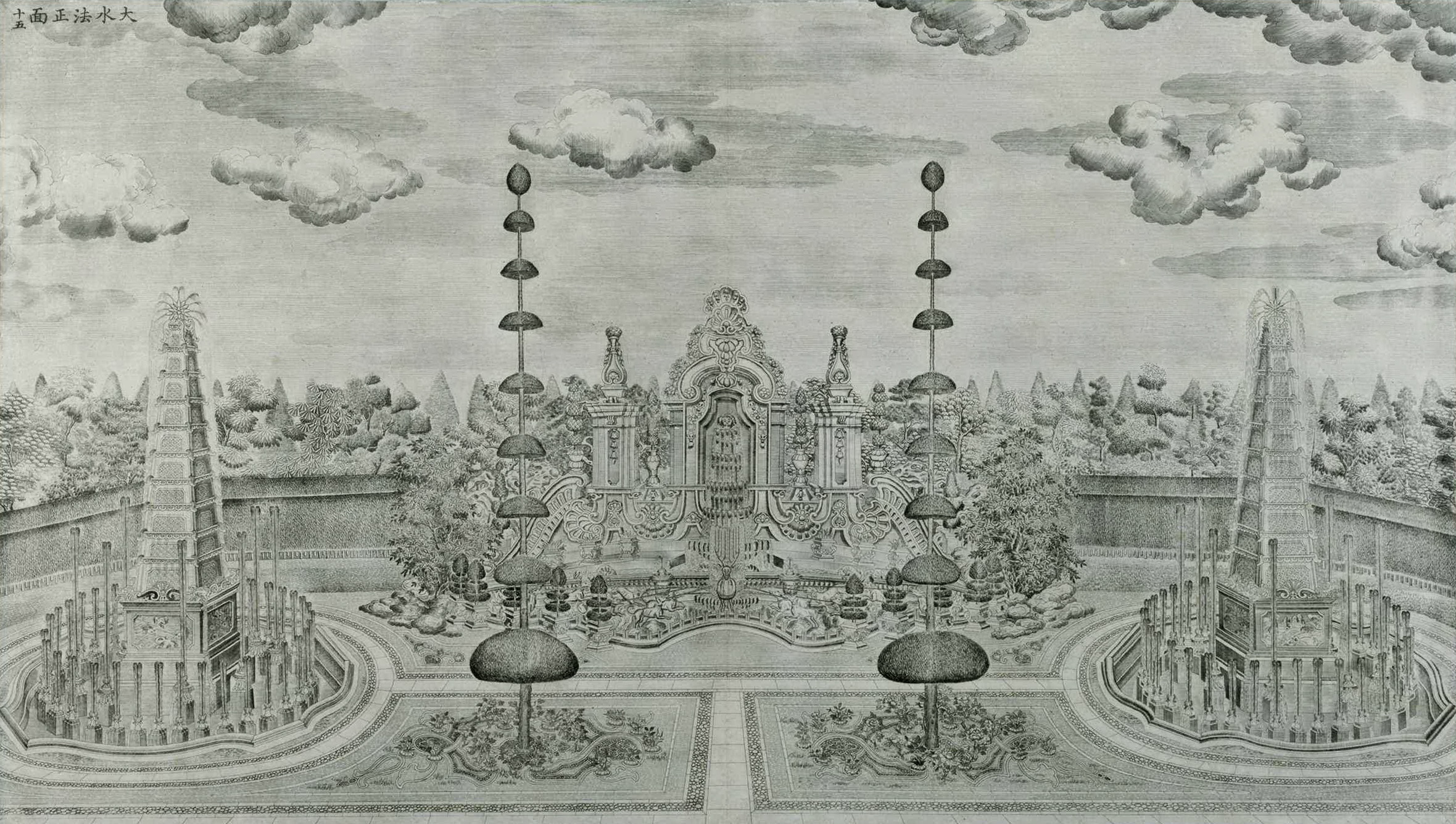 |
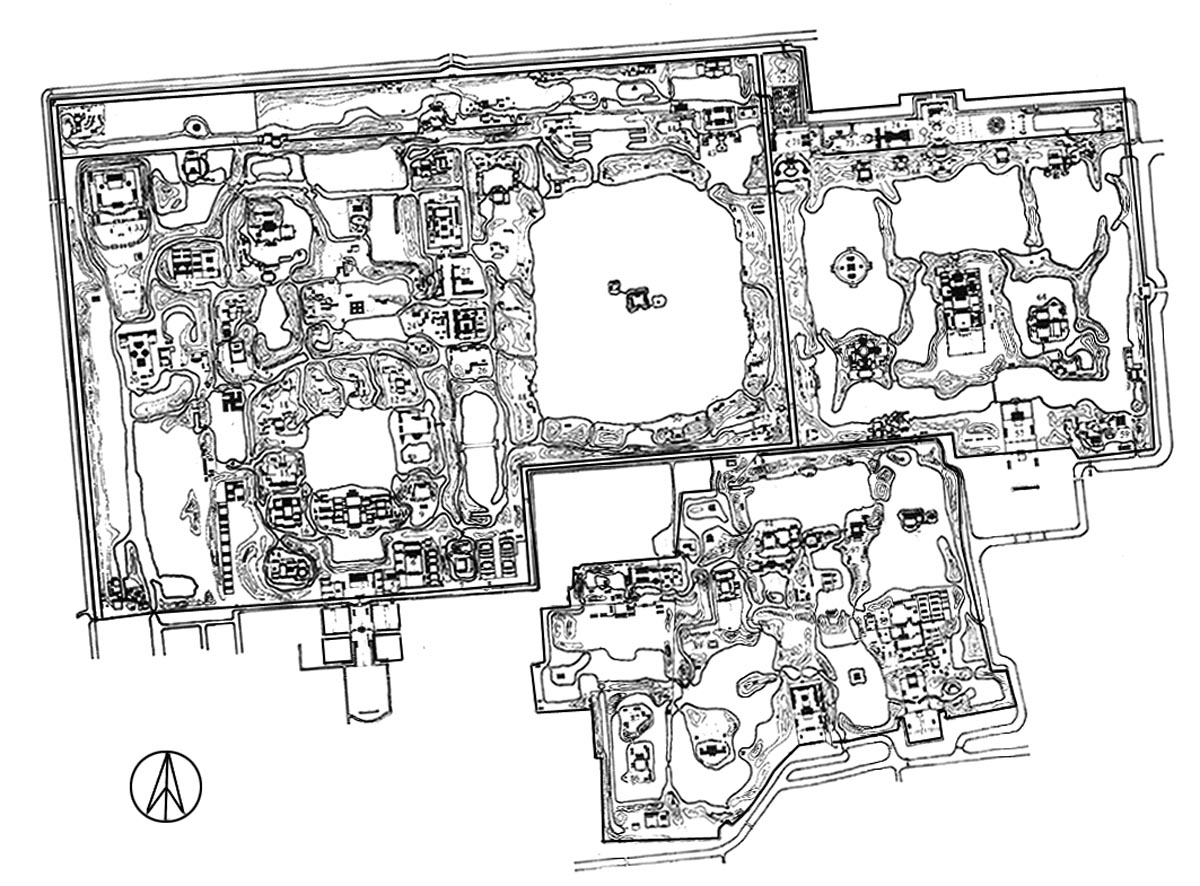
| The Old Summer Palace was mostly Chinese style, but also Tibetan, Mongolian,and European styles. The designers of the European Garden were the Jesuits Giuseppe Castiglione and Michel Benoist. They were employed by the Qianlong emperor to satisfy his exotic tastes. |
 |
| Looting of the Old Summer Palace by the British and French |
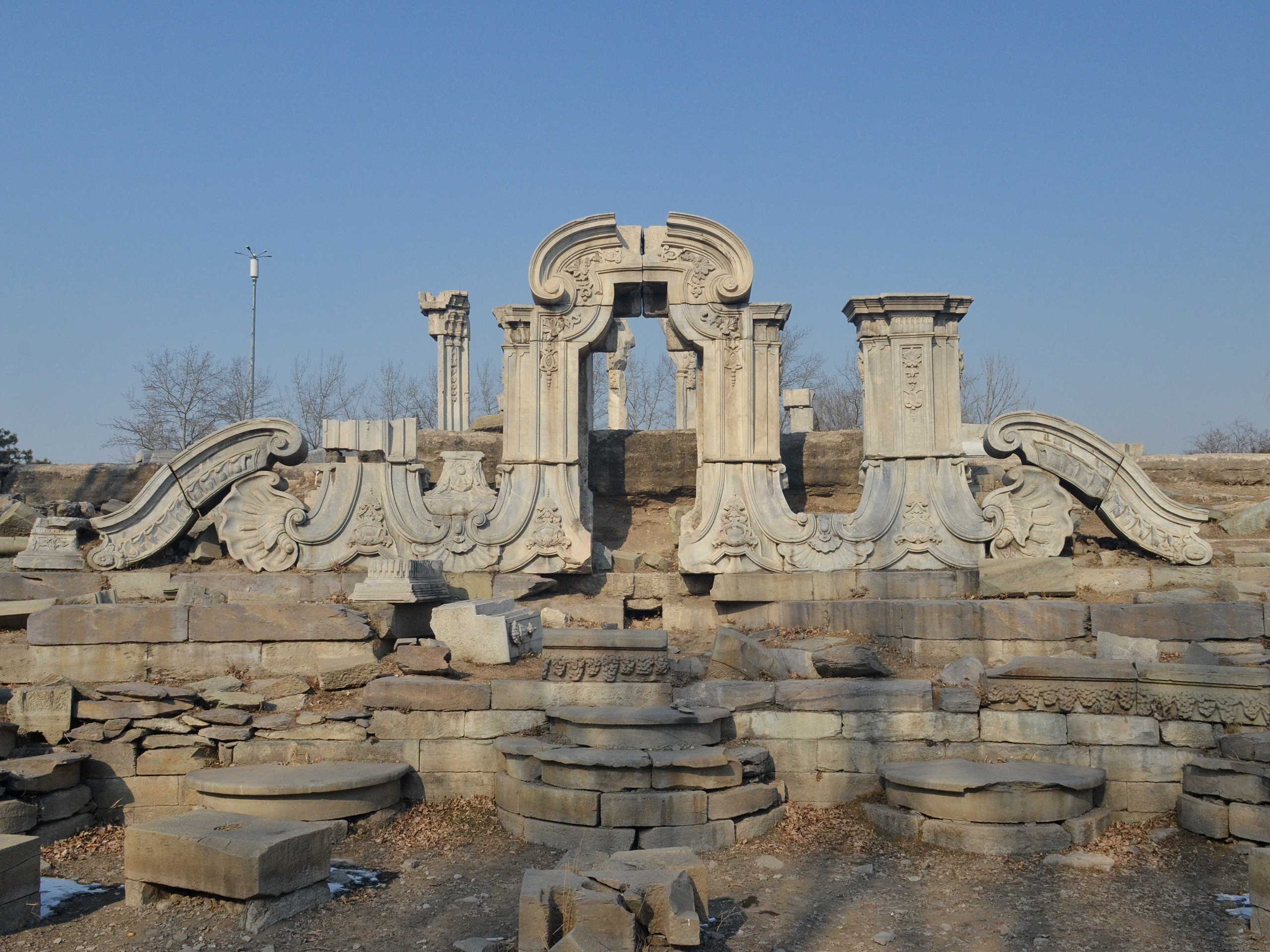 |
| Ruins of the European-style palaces today. |
 |
| Guan Huiming (官惠民1906-1937) died in Shanghai fighting Japanese (上海嘉定清水显阵地壮烈殉国) |
Han Zengfeng 韩增丰 (1916-1943), his courtesy name was Guangyu (光宇). After he graduated from Shanxi Academy (山西军官学校), he helped Yan Xishan (阎锡山). His nickname was Han Monzi (韩猛子) and although he died at age 27, his enemy called him Grandpa Han (韩老爷). In the winter of 1941, he led a surprise attack on Japanese airports, blew up enemy's transports, seized more than 10 communication posts, captured more than 30 prisoners of war, and seized a large number of Japanese supplies for the Eighth Army. Peng Dehuaii awarded him. In 1943, Han Zengfeng's troops at Camp County line were surrounded by Japanese. Again he led his army and successfully broke through the encirclement. Japanese commander Lin Fang Taro (林芳太郎中将) from 110th Division called him "God of War", and ordered his body to be wrapped tightly with a white gauze (白纱). He also wrote to the Chinese commander Nie Rongzhen (聂荣臻) expressing his admiration and regret. He ordered a retreat.
Over a half of Americans polled still believe that the bombing ofHiroshima and Nagasaki that claimed the lives of about 200,000 peaceful civilians in August 1945 was justified, the Pew Research Center has revealed today 2015. The war, was the deadliest military conflict in history, that some estimate killed more than 60-70 million of the world population. Industrialization made it possible for many countries to impose worldwide colonialism. Invasions included land invasion, culture invasion, economic invasion, because anything forced upon someone else is a invasion.
A Manchu Lao She's (老舍) Si Shi Tong Tang 《四世同堂》
 |
Map of colonial empires throughout the world in 1914Map: European colonialism conquered every country in the world but these five |
 |
| Charlie Soong at Vanderbilt University |
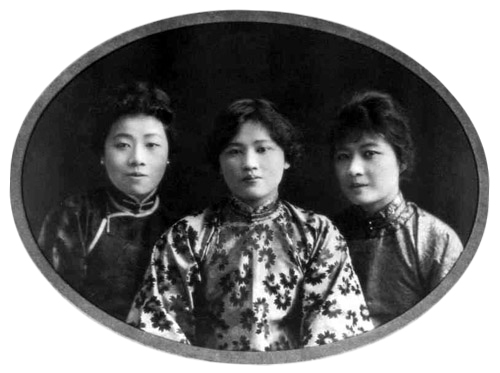 |
| Charlie Soong had three daughters |
His youngest daughter Soong May-ling (宋美齡), who went to Wesleyan College in Macon, Georgia, briefly attended Fairmount College in Monteagle, Tennessee. She then transferred to Wellesley College a year later to be closer to her older brother, Soong T.V., who was studying at Harvard University at that time. She married Chiang Zhong Zhen (蔣中正) (his style name was Kai-shek (蔣介石)) who succeeded Sun Yat-Sen.
Chiang grew up in a salt merchant’s family; he married his first wife Mao (毛福梅) in an arranged marriage when he was very young. Instead of going to his new bride’s bed on the first night, he ran over to his mother’s room and spent the night with his mother. Mao gave him a son named Chiang Jin Ge (蔣經國). Chiang Jin Ge, who married a Russian woman, later succeeded his father. Although Chiang had three wives before he met Song and he did not have any children with Song. He claimed that his only wife was Song May-ling in his will in Chongqing to his two sons. He was captured in Xi'an. As much as he wanted to deny his wife Mao in his personal life, he could not deny their only son. He was not sure the second son was his, since he and his friend were sharing the same girl (the landlord’s daughter), while he was in Japan. On the national front, he fought with another Mao (毛泽东) (Communist) with American help, even with the option of dropping nuclear bombs. He eventually gave up and retreated to Taiwan after refusing to bomb his homeland, since he saw what had happened to Japan from where his younger son came. Two Mao (毛) shared the same grandfather.
毛 福梅(蒋经国生母)的祖先是从清漾村迁去岩头村的,与毛泽东竟是同宗。与毛福梅为同族血亲的浙江大学教授毛昭晰先生2001年曾到清漾寻根问祖。 - See more at: http://www.backchina.com/news/2014/10/07/322616.html#sthash.OjJcdzgx.dpuf


His other son, Soong T.L.(宋子良), was General Manager of the China Development Finance Corp. and also a managing Director of the great Manufacturers Bank of China. The Soong (Han) Family ultimately changed the course of Chinese history.
His youngest son, Soong T.A., graduated from Harvard University in 1928. He was in charge of China the domestics goods, the Board of Directors of the Guangzhou Bank, General manager of Southwest Transport Company. He was the only one in the family did not get involved in politics.
Shangguan Zhibiao (上官志標 1907-1967) was from Shanghung (上杭县), Fujian, the same place from where my ancestors came. He was executive officer and Major (the second commander) in Eight Hundred Heroes (八百壮士), held over two months against numerous waves Japanese attacks and also covered Chinese forces retreating west during the Battle of Shanghai.
The successful defense was the greatest consolation to the Chinese army and people in the demoralizing aftermath of the Japanese invasion. The warehouse, also known also as the Chinese Mint Godown was a six-story concrete building built jointly by four banks in 1931, it covered an area of 222,800 square-feet. It was one of the tallest buildings in the area. The warehouse, used as the divisional headquarters of the 88th Division prior to this battle, was stocked with food, medical aid, and ammunition
Han Deqin (韓德勤 1891-1988) and Shangguan Yunxian (上官云相 1895-1969) were both Nationalist generals who commanded the Nationalist Army. Both played a key role in the New Fourth Army Incident in 1941 (皖南事变), which ended the unity of the Communists and Nationalists against the Japanese. This was the end of real cooperation between the Nationalists and Communists. Han’s army claimed the New Fourth Army attacked them; Shangguan Yunxian (上官云相) ambushed 9000 Communists by surrounding them with 80,000 soldiers of the Nationalist Army. After seven days and nights of fighting, Ye Ting, wanting to save his men, went to Shangguan Yunxiang's headquarters to negotiate terms. Upon arrival, Ye Ting was arrested. The New Fourth Army's political commissioner, Xiang Ying, was killed and only 2,000 people, led by Huang Huoxing and Fu Qiutao, were able to escape.
Han Xianchu (韩先楚1913–1986) was a general of the Chinese Communist Party. Han participated in many military campaigns and battles such as Battle of Pingxingguan, Liaoshen Campaign, Pingjin Campaign, Hainan Campaign, and the Korean War. In 1955 he was among the first group of military leaders to be awarded the Shang Jiang (Senior General) rank.
 |
| Han Xianchu (韩先楚1913–1986) |
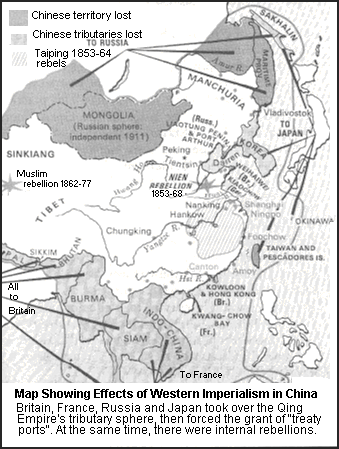
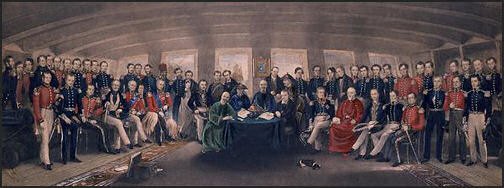

- 2000 - The ox, tiger, and monkey were purchased by the China Poly Group and are now at the Poly Art Museum in Beijing.
- 2003 - The pig was purchased by Stanley Ho from a New York collector. It was donated and is now at the Poly Art Museum in Beijing.
- 2007 - The horse was purchased by Stanley Ho from a Taiwanese collector.
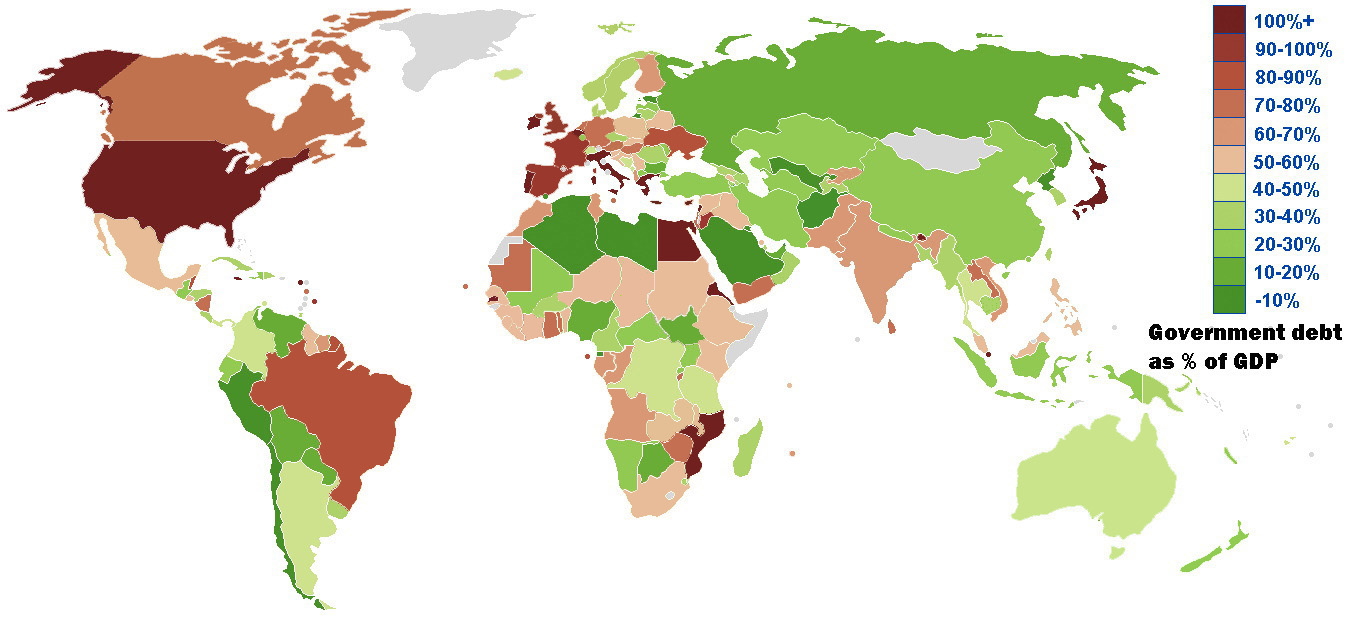
- Social Security (Social Security Trust Fund and Federal Disability Insurance Trust Fund) - $2.764 trillion
- Office of Personnel Management (Federal Employees Retirement, Life Insurance, Hospital Insurance Trust Funds, Postal Service Retiree Contributions) - $826.8 billion
- Military Retirement Fund - $419.5 billion.
- Uniformed Services Retiree Health Care Fund - $189 billion.
- Dept. of Health and Human Services (Federal Hospital Insurance Trust Fund, Federal Supplementary Medical Insurance Trust Fund) - $260 billion
- Department of Energy - $54.8 billion.
- Federal Deposit Insurance Corporation - $33 billion
- Department of Labor (Unemployment Trust Fund) - $30 billion
- Department of the Treasury (Exchange Stabilization Fund) - $26 billion
- Other Programs and Funds - $260 billion. (Source: Treasury Bulletin, Monthly Treasury Statement, Table 6. Schedule D-Investments of Federal Government Accounts in Federal Securities, August 30, 2013)
Both images bear the indelible imprint of China’s historical experience, of its patterns of philosophy and religion, and of its social and political thought.
In this free Chinese studies online course, these themes are discussed to understand China in the modern world and as a great world civilization that developed along lines different from those of the Mediterranean.
It is important to remember our past so we could shape our future. Since the Industrial Revolution, capitalism and greed have taken over the world. After Two World Wars, we are entering a new era of sustainability. I was also surprised to find out that my son's "World History" textbook in school did not include one page about China, and barely half a page on Japan and Asia as a whole. I fear for my children's future. Life really only needs fresh air, fresh water, and simple, fresh food; how much is too much? and what we are here for and where are we going as a human race? Silent Spring everywhere?
A Story of A Poem: “What Do You Really Want from Us?”
What Do You Really Want from Us?
Duo-liang Lin
When we were the sick man of Asia, we were called the yellow peril.
When we are billed to be the next superpower, we are called the threat.
When we closed our doors, you smuggled drugs to open markets.
When we embrace free trade, you blame us for taking away your jobs.
When we were falling apart, you marched in your troops and wanted your fair share.
When we tried to put the broken pieces back together again,
free Tibet you screamed, It was an invasion!
When tried communism, you hated us for being communist.
When we embrace capitalism, you hate us for being capitalist.
When we have a billion people, you said we were destroying the planet.
When we tried limiting our numbers, you said we abused human rights.
When we were poor, you thought we were dogs.
When we loan you cash, you blame us for your national debts.
When we build our industries, you call us polluters.
When we sell you goods, you blame us for global warming.
When we buy oil, you call it exploitation and genocide.
When you go to war for oil, you call it liberation.
When we were lost in chaos and rampage, you demanded rules of law.
When we uphold law and order against violence, you call it violating human rights.
When we were silent, you said you wanted us to have free speech.
When we are silent no more, you say we are brainwashed-xenophobes.
“Why do you hate us so much﹖”we asked.
“No,” you answered, “we don’t hate you.”
We don’t hate you either, but, do you understand us?
“Of course we do, ”you said, “We have AFP, CNN and BBC’s ……”
What do you really want from us?
Think hard first, then answer, Because you only get so many chances.
Enough is enough, enough hypocrisy for this one world.
We want one world, one dream, and peace on earth. This big blue earth is big enough for all of us.
The Corrupt World We’re Living In. But We Can Change It! Read More: http://www.trueactivist.com/this-video-exposes-the-corrupt-world-were-living-in-but-we-can-change-it/
DEATH BY GOVERNMENT By R.J. Rumme: The world total from1900-1999 was 262,000,000. href="http://en.wikipedia.org/wiki/List_of_Chinese_inventions">List of Chinese inventionsFrom Gemini AI: In 2026, China views itself not just as a rising nation, but as a re-emerged civilization state that has successfully returned to its rightful place at the center of the world stage. This self-perception is built on a blend of ancient pride and high-tech futurism.
Based on current official narratives and the 15th Five-Year Plan (2026–2030), here is how China conceptualizes its own identity:
1. The "Return to Greatness" (National Rejuvenation)
China views its modern rise as the end of a historical aberration. The official narrative of the "Great Rejuvenation of the Chinese Nation" frames the last two centuries as a temporary dip in a 5,000-year history of dominance.
Civilizational Identity: Unlike Western "nation-states," China sees itself as a "civilization-state." This means it views its political unity not just as a matter of borders, but as the preservation of a unique cultural and ethical core that dates back to the era of the Silk Road and the great dynasties.
Historical Justice: There is a strong sense that China has finally overcome the "Century of Humiliation." In 2026, celebrations like the 80th anniversary of the victory in the War of Resistance Against Japanese Aggression are used to reinforce the idea that China is now strong enough to never be bullied again.
2. The "Stabilizing Force" in a Chaotic World
In the face of global volatility—including the ongoing war in Iran and shifting Western alliances—China views itself as the world’s "manager of stability."
Economic Ballast: At forums like Davos 2026, Chinese leaders have presented the country as the defender of globalization and multilateralism, contrasting its "consistent" leadership with what it portrays as the "unpredictable" policy shifts of the United States.
A New Global Blueprint: Through the Global Governance Initiative, China sees itself as a provider of "global public goods"—offering an alternative to the Western-led order that emphasizes sovereignty and infrastructure over "liberal values" interference.
3. The "Techno-Futurist" Pioneer
China no longer sees itself as a "catch-up" economy. It perceives itself as the global leader in the "Fourth Industrial Revolution."
New Quality Productive Forces: This is the current buzzword in Beijing. It reflects a self-image of a nation powered by humanoid robots, quantum computing, and green energy. China views its dominance in electric vehicles (EVs) and AI not just as economic success, but as proof of the superiority of its "Chinese-style modernization."
Self-Reliance: Due to Western export controls, China’s self-identity now includes a "fortress" mentality regarding technology. It views the successful development of its own advanced chips as a "patriotic breakthrough."
4. A "Community of Shared Future"
Domestically, China projects an image of a harmonious, multi-ethnic family "united like seeds of a pomegranate."
Common Prosperity: The 2026 narrative focuses heavily on "High-Quality Development." The government portrays itself as a benevolent provider, shifting focus from raw GDP numbers to "happiness metrics," such as childcare subsidies and elderly care, to show that the fruits of growth are being shared.
Cultural Confidence: There is a noticeable surge in "Guochao" (national trend), where the younger generation views classical Chinese aesthetics—from Hanfu clothing to the poetry of Li Bai—as the "finest form of expression," blending traditional values with modern life.

No comments:
Post a Comment